Gadget Wisdom

Author: David Shanske

Registration time

2011-09-25 06:23:49

Website

https://david.shanske.com/

Email

david@shanske.com

All posts by David Shanske

0 Responses

Fedora 11 Delayed by One Week

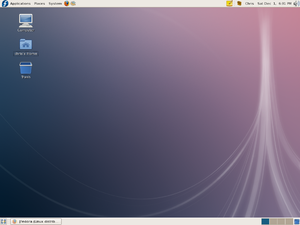
A Screen Shot of Fedora 8
Image via Wikipedia

To our disappointment, the Fedora 11(Leonidas) launch date has pushed back by one week. As noted on their announcement mailing list….

In a meeting today between Release Engineering, QA, and various team
leads, we decided to enact a 7 day slip of the Fedora 11 release date.
The primary reason behind this slip is the state of our blocker bug:
https://bugzilla.redhat.com/showdependencytree.cgi?id=F11Blocker&hide_resolved=1 We cannot begin Release Candidate phase until the blocker bugs are closed or at least in MODIFIED state. We are not there today, which would be our last day to enter RC phase and still have enough time to release on the 26th. We hope to enter RC phase in the next couple days, and hit our new target, June 2nd.

Freeze breaks for critical bugs will still be accepted, however trivial
bug fixes should be pushed as updates via bodhi. Thanks!

Better to have a stable system than an unstable one. Here’s hoping for June release.

Reblog this post [with Zemanta]
Published on May 20, 2009
Full Post
0 Responses

Roundup: Acceptable Use

ABC News Special Report ident, circa 2006
Image via Wikipedia

The MPAA, well known for its lack of insight on the subject of fair use…namely what we are allowed to do with content we’ve purchased,  maintained during a recent hearing at the Copyright Office at the Library of Congress that videorecording a TV set playing back a DVD is an acceptable analog alternative to breaking copy protection on a DVD(Video available here).  These meetings take place every few years. In 2006, professors were granted an exemption in order to break copy protection on DVDs so that they could utilize high quality video clips in classroom teaching.

Elsewhere, research indicates more than 40% of U.S. Households under 35 watch Internet Video on their TVs(note the emphasis) at least once a month. The idea that consumers can get good content to watch from free or cheap online sources and watch it on their TV sets using a variety of methods is not one that is good for cable companies. These companies can either improve their on-demand services and ensure that everything that is free online can be accessed on-demand for free, or pressure their content providers to keep as much content off the internet as possible. Even if they do, there is plenty of web-exclusive content to enjoy.

For those of us trying to enjoy our fair use rights and thinking about downsizing your cable bill, here are some stories we’ve been monitoring:

  • XBMC, the popular multi-platform media center software, has released version 9.04, code-named Babylon. The release incorporates many improvements over previous versions. Check it out.
  • A hack has been released that will allow any computer to emulate the OCUR compliant BIOS, permitting any Windows computer to support digital cable with a Cablecard. The hack can be easily modified, should countermeasures be enacted.  We never understood why the cable companies should care. You are still paying for cable, after all.
  • TV Squad reports that ABC News is increasing its Youtube presence. The site will feature news from several ABC programs, like Good Morning America, 20/20, Nightline, ABC World News, and This Week with George Stephanopoulos.  Another reason to dump the TV.
  • TV Squad also taught us the Food Network offers a website, Food2.com, where they offer video recipes and web only shows for your enjoyment.
  • Boxee, continuing to gather support, has launched a contest for developers to encourage new plugin applications. Recent new plugins for Boxee include the highdefnow HD feed, who has given Boxee users direct access to their files which means you’ll get the smoothest playback from Boxee, without the same stuttering that a flash player might produce. This is a perfect example of content providers working with Boxee to promote their content.
  • Jumping on the Twitter Bandwagon, ABC’s Nightline news anchors are going to host a weekly online news program that uses Twitter for debate and questions. The show, called NightTline will air its first episode Wednesday at 12:30PM EST. It will air not only on the Nightline website, but on ABC News Now, offered as a subchannel on many ABC stations and cable systems.
  • With the signing of Disney to the Hulu family, it leaves CBS as the only major network not offering such content on Hulu, preferring its own media player. Meanwhile, CBS does offer content on Youtube.
  • Speaking of Youtube content for CBS, MGM, Lionsgate and Starz, who made content available last month, most users complain that the content is lacking and limited. But we hardly expected them to put their A-game on Youtube.
  • Time Warner Cable, defeated in its attempts to start metered bandwidth, another method for the cable companies to slow-down the growth of internet-based video, declared that it is not giving up on its hopes to implement the feature, but merely withdrew due to negative public opinion.
  • Netflix, not only a respected DVD-by-mail company, but slowly being known for its on-demand streaming, reported it isn’t particularly concerned about iTunes or Hulu as competition, but the DVD Kiosk, such as Redbox. Cheap $1 rentals are one of the reasons that people leave their Netflix subscriptions. With the gradual closing of video stores, the kiosk is becoming more ubiqitous. The company is concerned that if the kiosk companies get their costs down even further, they could very well be in more stores and locations…practically on every street corner. However, what these machines lack is the extensive library that Netflix offers. Unless you can order any DVD online, and have it delivered into the kiosk to be picked up, in addition to its standard stock of DVDs, then Netflix will always have a place.
  • Netflix also reports more streaming deals will be coming. The company had a “tremendous amount” of consumer electronics deals on the way, We’ll just wait for Linux. If not, the Roku Box still looks good to us, if they can get media streaming from the home computer added to it.
  • PBS Launched an Online Portal for full-length versions of some of its programs. Previously, while PBS had content online, it was not always easy to find. It can be found at pbs.org/video.

There is more to come. We monitor hundreds of stories, but there are only so many hours in the day, and we do have a day job. Coming soon, we will be taking our Streaming Video Guide from a different post, cleaning it up, and updating it into a permanent and regularly updated page on our site.

Reblog this post [with Zemanta]
Published on May 12, 2009
Full Post
0 Responses

Why you Might Rethink Buying a Kindle

Image representing Amazon Kindle as depicted i...
Image via CrunchBase

A while back, we commented on why a Kindle might not be so cost-effective.

Today, things change. On Wednesday, the Kindle DX was introduced. It will be an alternative, not a replacement for the Kindle 2. It boasts a 9.7-inch display with auto-rotation, high-speed wireless access to 275,000 books, 3.3 gigabytes of storage(roughly 3,500 books), native support for PDF documents, with no panning, zooming or scrolling necessary.

The product will begin shipping this summer and will cost $489. Three newspapers will offer a reduced price on the Kindle DX in exchange for a long-term subscription: The New York Times, The Boston Globe and The Washington Post. This is where one might reconsider the Kindle, if the reduction is enough to justify the purchase. However, this apparently will only be offered where Home Delivery of the papers are not. That may be offered through the Kindle 2 as well. Details are not yet available.

The Kindle DX eliminates some of the problems with the Kindle…namely that documents are printed on 8 1/2 by 11 sheets of paper most commonly, and the Kindle 2 is half that size at 6 inches. The DX has 2.5 times the surface area. Amazon has reached agreements with three leading textbook publishers that represent 60 percent of the market: Pearson, Cengage Learning and Wiley(But not McGraw-Hill Education.). Thus, the Kindle DX will be a perfect tool for college campuses, where textbook savings(hopefully) can be applied toward the device. Students will try out the Kindle DX this fall at Arizona State, Case Western Reserve, Princeton, the University of Virginia, Reed College and Pace.

As Techcrunch pointed out, for the 275,000 books that are available on the Kindle, sales are already 35 percent of the same books in print. That is a shocking statistic.  But while we continue to be impressed by the Kindle and its variants, the price tag is still a matter of concern. BusinessInsider pointed out devices you can buy for less than $489, including a netbook, iPhone, AppleTV, Wii, Xbox 360, 22″ LCD HDTV, etc.

Which is our point. When given the choice between a netbook and a Kindle, we opted for the netbook, where we can read the New York Times and most news sources free with a net connection. It isn’t a dedicated device, which has its pros and cons, and it lacks the always-on connection included with the price of purchase(which is certainly an advantage) Web anywhere for life is certainly a pro as well.

On the software side of things, we feel certain a Kindle Reader will come for the PC(although Linux will no doubt take more time), as they already have an iPhone reader and they want to corner the e-book market. Barring that, you can always turn a netbook into an e-book reader with something like FBReader, which supports most non-DRMed formats, and buy your books from non-Amazon sources(More on this in a future post).

What it comes down to is that we love what the Kindle represents, and we are impressed by its continual evolution, but we are staying away for now.

Reblog this post [with Zemanta]
Published on May 7, 2009
Full Post
1 Response

Moonlight 2.0 Preview is Out and Why You Should Care

Microsoft Silverlight
Image via Wikipedia

Moonlight is a Novell-sponsored Linux implementation of Microsoft Silverlight, which is Microsoft‘s equivalent of Adobe Flash. We hate the idea of websites we can’t use, and like the idea of Linux-plugins that correct this. However, there is one show-stopping app for Moonlight: Netflix.

The Netflix Watch Instantly system is not supported under Linux, mostly because it uses Silverlight. It is particularly odd, as we know it could be supported under Linux. The Roku NetFlix/Video Player is Linux-based. Silverlight itself does not have the market-share Adobe Flash does, and we are thus surprised by Netflix’s choice.

The latest version of Moonlight, 2.0 preview, supports Silverlight 2.0, which is necessary for Netflix, but does not support the DRM stack, which is necessary for Netflix to run. We have high hopes this wll come someday. Until then, we guess we are limited to Flash-based web media.

Moonlight 2.0 Preview is available as a Firefox plugin for both 32 and 64-bit Linux distributions.

Reblog this post [with Zemanta]
Published on May 5, 2009
Full Post
0 Responses

Happy Birthday, Game Boy

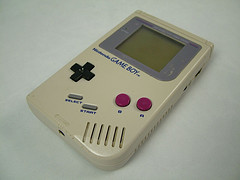
Nintendo Game Boy
Image by unloveablesteve via Flickr

The 20th anniversary of the Game Boy‘s release was this week. It was originally a simple device with a green monochrome screen, four buttons (A, B, Start, Select), and a four-way directional pad, much like the original Nintendo.

It was bundled with Tetris, and with that, and a few other games, we spent many an hour during our youth. We still have it in a box somewhere, ready to relaunch a wave of nostalgia, the same way we recently pulled out our Nintendo.

Our gaming time has reduced as we’ve grown older, and limited of late to nostalgia. Nostalgia is a wonderful thing. For the Gameboy, it has launched a wave of portable game players as successors that are still popular today.

Reblog this post [with Zemanta]
Published on April 24, 2009
Full Post
0 Responses

Ubuntu Jaunty Jackalope Released

Ubuntu logo
Image via Wikipedia

Ubuntu 9.04 was released this week, a month before the scheduled release of our preferred OS, Fedora.

Like the upcoming Fedora, a lot of the major updates were upstream. Gnome was updated to the latest version, for example. We’ve commented on that before.

“In version terms, Fedora 11 will be ahead of Ubuntu 9.04. Kernel 2.6.29 vs. 2.6.28, Firefox 3.1 instead of 3.0, Thunderbird 3.0 instead of 2.0, OpenOffice 3.1 vs. 3.0 and filesystem ext4 instead of ext3. Both ship with Gnome 2.26, KDE 4.2 and XFCE 4.6. But, we admit, new versions are not always better. Well, they are, that is the point. But sometimes new features result in new problems.”

The main focus of the new Ubuntu isn’t new features per se, although it does include Ext4 and their new notification system, but speed and stability. And all reports indicate they’ve achieved their goals.

We’ll be back next month with our review of Fedora 11, and we’ll see how the two compare when fully released.

Reblog this post [with Zemanta]
Published on April 24, 2009
Full Post
1 Response

Twitter and IM Clients

Image representing Twhirl as depicted in Crunc...
Image via CrunchBase

We have been using IM for years, and migrated over to Pidgin some years ago when we were still on Windows as Trillian Pro was not being updated regularly.

So, yesterday, when we discovered a review of the Trillian Astra Beta, we thought we would explore the issue of clients for not just IM, but Twitter. The positives of the new Trillian, themes, notifications and replies, customizations, and email. Check it out.

Fedora has decided to make Empathy the new IM client in Fedora 11 over Pidgin, as it is more closely integrated with the desktop. Pidgin will still be available as an option though. We did a few tests of Empathy, but the version we had didn’t import from Pidgin, and we have years of log files we don’t want to lose, so we’ll hold off on migration decisions for now.  Empathy’s superiority is in design, not necessarily in use.

We used Pidgin for a while not only for IM, but for Twitter, when it first started, except the Twitter plugin was a bit buggy and kept crashing the whole program.

So, we sought to separate our Twitter from our IM. We tried several Twitter clients in Fedora. The only one that supported multiple accounts was Gwibber, and it had limits on how many messages could be displayed. So we went to Adobe Air and tried the immensely popular Tweetdeck. However, it does not have multiple account support, so we migrated to Twhirl.

Twhirl has everything we need. But Twhirl will likely soon be replaced by Seesmic Desktop, which is still in preview releases. We’ll be staying with Twhirl at least until its successor is out of preview. One blogger predicted that Seesmic will blow Tweetdeck out of the water. Everything on Seesmic is supposedly faster. Both Tweetdeck and Seesmic offer grouping functions, something Twitter itself should integrate, allowing those people you are following to be categorized by you. Seesmic is more a competitor for Tweetdeck than a straight successor to Twhirl.

Either way, there are a lot of IM and Twitter options out there. One has to find what works for them. So far, Pidgin and Twhirl work for us. Tell us what works for you.

Reblog this post [with Zemanta]
Published on April 24, 2009
Full Post
0 Responses

Video News

Matchbook showing the Blue Network logo, circa...
Image via Wikipedia

    Sometimes, we just want to share some news, without much fanfare. Here are some of the little bits we’ve collected over the last two weeks you might find interesting.

    • Microsoft has clarified its position on third-party codecs in Windows 7. The problem is that in Windows 7, if the video you want to watch is naively supported by Windows, there’s no easy way choose a different codec. You’ll be able to add third-party support for a codec not supported initially, but replacing the defaults will apparently be difficult. On a positive note, we are certain someone will come up with an easy codec tweaker program to solve this, bt Microsoft clearly isn’t concerned.
    • MythBuntu is testing the beta of its Jaunty Jackalope 9.04 version. MythBuntu is a version of Ubuntu that is bundled with the software and setup for the MythTV suite, which is a Linux-based DVR.
    • Disney may end up with a stake in Hulu, the online streaming site, in exchange for adding ABC(which they own) content to the site. More Disney content may has been discussed but it centers on ABC; other possibilities could include ESPN, and, if not the Disney Channel, some offshoots of it. We’ll see what comes of that.
    • If not that, Youtube and Disney have announced a deal for the launch of multiple ad-supported U.S.-only channels featuring content from ESPN and Disney/ABC Television. Previews are up now, and the ESPN channel will launch mid-April, ABC in mid-May. There is no deal with Youtube on full episodes though links will be made back to the various channel homepages where additional content may be available.
    • Speaking of online content, the Times reported last week that some broadcasters and cable networks are worried that their push to put some of their programs online may be threatening the revenue they get from showing it on TV. This is why the cable companies are getting involved, by offering the content online people demand, but only as part of their subscription process. The networks may license the content to other organizations on a more ala carte basis, but only if their revenue is maintained.
    • ZeeVee released a retooled Internet video browser. Named Zinc, it appears to be a competitor to Boxee, the open-source media center/video browser. It works for Windows and a Mac version is scheduled for sometime this month.
    • Cox Communications is planning on rolling out tru2way set top cable boxes starting this summer. For those of you unfamiliar with the technology, tru2way is meant to expand the Cablecard system to allow a full range of options, including program guide and on demand, on televisions equipped with the techology, which includes a Cablecard for decryption. Unfortunately, like Cablecards, there is a lack of TVs equipped for this technology.
    • Hulu is now the fourth largest video site in the U.S., as statistics for the month of February prove. Since last May, Hulu has grown the number of videos it streams by 277 percent, and its audience has grown 410 percent.
    Reblog this post [with Zemanta]
    Published on April 5, 2009
    Full Post
    0 Responses

    64-Bit Support

    AMD64 Logo
    Image via Wikipedia

    Arch Linux announced that a previous announcement that they were discontinuing support for the 32-bit/i686 architecture in their distribution was, in fact, a an April Fool’s joke.

    On a positive note, some users discovered that they were, in fact, running 64-bit processors, and many of them switched to the Arch Linux 64-bit version. As they put it in their original post, “the overall opinion of the developers is that the x86_64 port is now complete enough to justify this decision and that this is in keeping with Arch’s philosophy of supporting current generation hardware. The x86_64 architecture has been available since 2002 (compared to i686 which is from 1995), and we believe most of our i686 users have x86_64 compatible hardware.

    If you are running a 64-bit processor, why shouldn’t you run the 64-bit version of your operatng system? While 64-bit Windows is still, for some reason, immature and undersupported, it is very mature on Linux, although some software has not be retooled to compile under it…Boxee comes to mind.

    Fedora 11, the next version of Fedora we’re so enthused about, they are revisiting their architecture support. The 32-bit version of Fedora will now be built for i586 by default, instead of i386, indicating a removal of official Fedora support for older 32-bit processors. Realistically, anyone who is still running an older processor…you should upgrade. The update should produce speed increases.

    The biggest advantage of 64-bit operating system is that it allows addressing of more than 3.5GB of RAM. With RAM becoming more and more affordable(Our first megabyte cost $80, now that’ll get you several gigabytes), the speed boost is a useful one. Further support under 32-bit Fedora for PAE-supporting 32-bit hardware(Pentium II/III/4, or Atom) will allow some support for more RAM under these processors.

    And finally, 64-bit OSes can run 32-bit software. Backward compatibility is assured.

    So, why not? Someone tell us.

    Reblog this post [with Zemanta]
    Published on April 2, 2009
    Full Post
    0 Responses

    Here a Netbook, There a Netbook, Everywhere a Netbook

    comparison of the sizes of a package of handke...
    Image via Wikipedia

    CNet reports that the netbook is a hit with consumers, and likely will continue to be so for the foreseaable future. According to Displaysearch, they will comprise 20% of the 133 million notebooks to be shipped this year, amazing considering the netbook category had no market share in 2008. however, they predict consumers will return to buying notebooks with more features as the economy turns around.

    We, and many others disagree with the idea that netbooks are popular because of the economy. That’s certainly a small part of it, but we bought one, and we are not alone, for the portability. For many years, a tiny, reasonably powerful notebook costs big bucks. A 14″ laptop always cost us more than the same laptop in a 15″.

    Then comes the Eee, and launches the netbook category. We hate carrying around a 14-17″ laptop. It is portable, but most of the time, it is a pain to carry around. We don’t need a mobile computer for gaming. And even if we were gamers, we can have a computer at home to handle that. Netbooks are for productivity…perhaps video/sound on the go as well.

    We wonder if the manufacturers see these machines differently than we do. Asus announced the upcoming Eee 1004DN, the first of the netbooks to offer a built-in optical drive. One of the best things about the netbook is the form factor. Adding an optical drive will turn it into a more efficient video playback system, if that is what someone wants, but it endangers the form factor. Already, the netbook has grown. Going from a 7″ screen to 9″ and 10″ was a good improvement, and did not increase the size incredibly, but additional weight of continually adding features, as well as increased costs, will eliminate the distinctiveness of the class.

    Personally, we’ll just rip something and load it onto the hard drive or onto a flash card and stick it in the side. Otherwise, we have an external USB DVD burner we made out of a liberated notebook DVD drive and a converter case we bought online. It keps the equipment we have to carry to a minimum. We’re not the only ones who are concerned about the manufacturers destroying the idea of the netbook. The net is full of thoughts on the subject.

    Continue to push the envelope, add in better low-power processors as they become available…improve the graphics, the screen build quality, the battery life. But keep the size and price points.

    Meanwhile, OCZ launched a DIY netbook called the Neutrino. It has the standard netbook accoutrements…10 inch 1024×600 screen, Atrom N270, etc. Missing is a hard drive, RAM, multicard reader and an operating system, all of which you add as you wish. We’re in favor of customization, but the price point of $300 is a bit much for a system that doesn’t work out of the box considering the competition.

    However, that said, many of the netbooks are not geared toward upgrades. The MSI Wind we bought has no slots on the bottom to open. You have to remove the whole bottom to access the hard drive. Some of the systems have the SSD drives or the RAM soldered onto the main board. Upgrade paths allow users to buy now, improve later.

    Speaking of the Wind, MSI has announced the U123, a three pound laptop with a 6 or 9 cell battery, powered by the Atom N280 1.66Ghz CPU and the Intel 945GSE chipset. There’s 1GB of RAM expandable to 2GB, wireless, Bluetooth , camera, and a card reader. Essentially, the equivalent of the Eee 1000HE, although likely less expensive, as the Wind has been.

    There’s more to say about netbooks. Next time, we’ll discuss how we outfitted our MSI Wind in more detail to make it the best it could be.

    Reblog this post [with Zemanta]
    Published on April 2, 2009
    Full Post

    Get New Posts By Email