Gadget Wisdom

Author: David Shanske

Registration time

2011-09-25 06:23:49

Website

https://david.shanske.com/

Email

david@shanske.com

All posts by David Shanske

0 Responses

The Great Migration: When Moving Day Comes Around for Your Server

In New York City, from colonial times to the mid-20th century, May 1st was “Moving Day”, when the majority of leases in the city would expire and much of the city would pick up and move.

Every few years, it is time to update my servers. While servers require regular bug fixes, every few years, it is time to clean out the cruft. Just as people move because of changes in conditions and for new opportunities, the neighborhood that is the internet has become a noisier dirtier place.

Why Your Server Needs a New Neighborhood

The world changes so much in between major upgrades. Now we have AI bots scraping the internet, hammering websites and using up resources, requiring new solutions. We didn’t need a heavy deadbolt to keep the bots out, a simple lock would do. Moving isn’t just about a new view; it’s about surviving the new climate of the web.

I could just fix things that are worn, sometimes you just need complete replacement. Even with the same specs, this ensures a clean start, and a better server.

When it comes to home servers, moves usually happen when I am upgrading the hardware. But when it comes to my VPSes, which are hosted online, I tend to build a new server, migrate to it, and then shut down the old one. It also allows me to reexamine and refresh myself on things that may have developed in the interim. Review new software options, new features, configuration settings.

So, how do you go about this.

Packing Your Digital Boxes: The Audit Before the Move

  • Inventory the services you have.  Docker containers, databases, servers. It is not just the services, but what they are used for.
  • Toss out the junk you don’t need anymore…old software that isn’t active, cron jobs that don’t need to run.

Security and Monitoring: The Modern Dilemma of Convenience vs. Control

In the modern world, security gets harder and harder for the average person. There is a reason why people are turning to companies like Cloudflare to handle it for them. Cloudflare does offer a generous free plan, but it adds a dependency not under your control, and a free plan can so easily turn into a paid trap. Even though my firewall has held for many years, it lacks more modern tools to help me manage it, as I still do everything in a text window. For the same reason that people use Cloudflare, I don’t always have the time to get down into the code, and need the ability to do quick monitoring on the go.

When a Total Rebuild is the Only Cure

This is a great time to review new operating systems, new servers, and if sticking with the same, new configurations. If you never rebuild anything, you also forget how your system works.

In the end, you will have a brand new server, ready to face new challenges and you’ll be set for a few years. And as I work on this, I will be commenting on some of those tools.


Published on May 6, 2026
Full Post
0 Responses

Elegoo’s Promised CANVAS Upgrade Is Finally Coming to the Centauri Carbon

After months of controversy and growing skepticism about it ever coming out, Elegoo’s long-promised CANVAS multi-color upgrade for the original Centauri Carbon has finally gone on sale.  The surprise? The official launch price is just $55, a far cry from what people expected.

The Backstory

The internet was abuzz when the Centauri Carbon came out. A CoreXY 3D Printer with a $300 list price with an enclosed chamber. And with a promised future multi-filament upgrade to print multiple colors as part of the same print.

The Centauri Carbon sold a lot of units when it released in Spring of 2025, but the multi-filament system never materialized. Elegoo released the Centauri Carbon 2 in January…so only months about the release of their big hit. The Centauri Carbon 2 is a refinement of the original Carbon, with:

  • reinforced body to reduce vibration
  • upgraded belts, motors, and pulleys to increase smoothness
  • redesigned extruder
  • improved hotend
  • improved cooling system and stronger fans
  • better included build plate
  • quieter motors reducing sound
  • the multi-color system, called CANVAS, on day 1.

That meant an improved version of the printer that Elegoo shipped to people while still refining it was suddenly no longer a production model. Pre-orders of the Carbon vs the later production models came with improvements and fixes, leading some to say they were using early adopters as beta testers. And now, without offering the promised accessory, they had released a version 2. That produced concerns that the promised multi-color support would never materialize, and that replacement parts for the original Carbon would dry up quickly.

Prusa, a long standard in the industry for open printers, offers upgrade kits. You can keep buying the improved components and turning your version 1 into a version 2, and so on. Considering how close the Carbon and Carbon 2 are and how many people bought them, and the short lifecycle of the original, it is surprising that Elegoo or third party hardware manufacturers wouldn’t consider supporting some of the improvements of the Carbon 2 on the original.

Elegoo apologized and insisted they had some issues, but they still intended on completing the system for the original Centauri, and offered an apology gift, a choice between a $50 coupon at their store valid for 3 months, an $80 discount on the Carbon, or a year long extension on the warranty, excluding consumable parts. It was starting to look as if they’d never offer the item. And they took a lot of heat for it.

On Monday, I woke up to see not only had it gone live, but the initial pre-order window for May delivery was already sold out, with shipping for the second round to be in June. And the price… $55. As of the evening, shipping dates for new orders were at end of July.But scandal hit rather quickly, at least the sort of thing the internet calls a scandal.

At a recent 3d printing event in Boston, Elegoo’s booth had a Centauri Carbon with the CANVAS system on display, and promised that units were shipping to warehouses around the world, and it would go on sale soon. A page went up, with a price of $150. Then the page went down. Several people get advance units to look at, so we got some ideas of what it was. Then the big reveal at $55, and some advance reviews started to leak out, very slowly.

What We Know about the CANVAS upgrade

This isn’t just installing a unit and plugging it in. Early reviews of the item reveal you have to perform some major surgery on the printer to upgrade it. The sheer amount of parts is why most people thought it would be a lot more than $55.

  • The CANVAS unit is mechanically identical to the one used on the CC2, but has a different circuit board.
  • It uses the same spool holders as the CC2, but it supplies adapter brackets to mount them as there aren’t the same holes to install them as are on the CC2
  • A new toolhead circuit board has to be installed. It contains ports for three new sensors. A filament detector sensor on the printhead, a filament cutter sensor, and a front cover removal sensor….all features present on the CC2.
  • There is no opportunity to upgrade to the hotends and the higher temperature rating that the CC2 has.
  • The improved CC2 extruder is supplied, replacing the original extruder. I had several problems with the extruder on the CC1.

Even without wanting the CANVAS unit, the new sensors and extruder are improvements of their own, and would probably cost nearly as much on their own for other printers.

What We Don’t Know

There is one downside to the CANVAS upgrade. The original Carbon had a glass lid that served to enclose the unit when printing filaments that required it. The CC2 has a large plastic hood. Visually, this is significantly less elegant than a glass top. The Carbon upgrade prevents the original glass lid from being used, and the upgrade provides no cover, which means you have a choice between not printing those materials or not installing the upgrade.

We don’t know if Elegoo has a solution to this problem, but we know either Elegoo, hobbyists, or both will figure out a solution to that problem. My personal prediction is that hobbyists will come up with something, as they usually do.  But Elegoo will have to say something. They mismanaged this situation, and they are trying to recover, partially by selling the pre-orders at such a low price.

We don’t know enough yet about the reliability of the solution overall, although it is the same basic design as the CC2, so the reviews of that should bear out for this version. As reviews trickle in, and I await my delivery date, we will see what news develops.

Is it Worth Buying?

This upgrade doesn’t turn a Carbon into a Carbon 2, but it gives a variety of upgrades present on the two. If you bought the Carbon for the multi-color printing, it is a no-brainer at the price. If you bought the Carbon to do filaments that required the lid to be on, I’d still pre-order the device and trust a solution will come. And in the meantime, you get the other upgrades.

Published on April 28, 2026
Full Post
0 Responses

Yuzu Keycaps Review: The Best Way to Make Custom Keycaps in 2026

This week I opened a box I had been waiting weeks for: my first fully custom keycap set.

Why Buy Custom Keycaps

If you’ve ever bought a keyboard with an unusual layout—or just wanted something no one else has—you’ve probably run into the same problem I did: standard keycap sets don’t fit your needs.

I’m a collector of keyboards and I have:

  • Ortholinear keyboards
  • Split Keyboards
  • Keyboards with Enter, Tab, Shift, and Backspace keys in atypical sizes
  • Low Profile Keyboards

But beyond that, sometimes you want to create something no one else has, or some other variation. The design sites for these services are relatively easy, but putting together an entire design is not always easy.

The Options Explored

I opted to order from Yuzu, who offers Cherry, KAM, and what prompted me to order, the recent introduction of PBS and PFF profiles. PFF is a low profile keycap profile that only recently was designed. They also offer a lot of different color choices.

There are two other purchase alternatives:

  • FKKeycaps, who offers custom MDA, Cherry, XDA, DSA, LPF, SLK and MBK. SLK and LBF are also low profile keycaps that work with MX style low profile switches, and MBK, which only works on Choc V1 switches. FKKeycaps only seems to offer one single color of keycap.
  • Thockfactory, who offer only Cherry profile. Their price for Cherry is lower than the competition, but they don’t alow for custom layouts, only several presets, but they allow a variety of colors.

The Profiles Explained

If you look down at your keyboard now, you may notice one of two things. The keycaps are all the same shape and height. This is called uniform. Where each row is a different shape and height, that would be a sculpted profile.  Typists who rely on the subtle angle changes of a sculpted profile to orient their fingers may take a short time to adjust.

Standard Switch Profiles

  • Cherry –  one of the most recognizable and popular sculpted keycap profiles. It has a maximum height of 9.4mm with a cylindical top.
  • DSA – uniform profile with a height of 7.6mm and a spherical top
  • XDA –  uniform profile with a 9.1mm height and spherical top as well as a larger surface area than DSA
  • KAM – uniform profile with a 9.1mm height and spherical top and a surface area in between DSA and XDA
  • MDA – sculpted profile with a maximum height of 12.36mm and a spherical top
  • SLK – A 7.5mm uniform spherical keycap that extends below the typical bottom of a switch
  • PBS – uniform profile with a height of 7.5mm tall, which makes it similar in height to DSA, but combines cylindrical front-to-back curvature with a spherical scoop

Low Profile Switch Profiles

Generally speaking, low profile keycaps are uniform.

  • PFF – 5mm tall, using the same cylindrical front-to-back curvature with a spherical scoop used in PBS, which makes it one of the few low profile keycaps that isn’t flat
  • LPF and MBK – are only compatible with Choc V1 low profile switches. Choc V1 switches can be lower than low profile MX switches, which PFF supports, but there is a lot less variety in general.

Yuzu: A Review

In terms of flexibility, Yuzu can’t be beat with over 300 colors. This allows you to pick colors, fonts, icons and graphics to create sets that no one has.

It is the ultimate in customization for keyboard enthusiasts. I placed an order when they started offering PBS, and received my first custom design a few weeks later…the delay due to the popularity of the new offering creating a backlog. You would not be able to tell these were custom keycaps..they look as good as the commercial ones. Why? Because Yuzu is a project of Keyreative, a commercial keycap manufacturer. Keyreative started out as an OEM manufacturer of keycaps before branching out into direct sales, so they are already the manufacturer of many keycap sets.

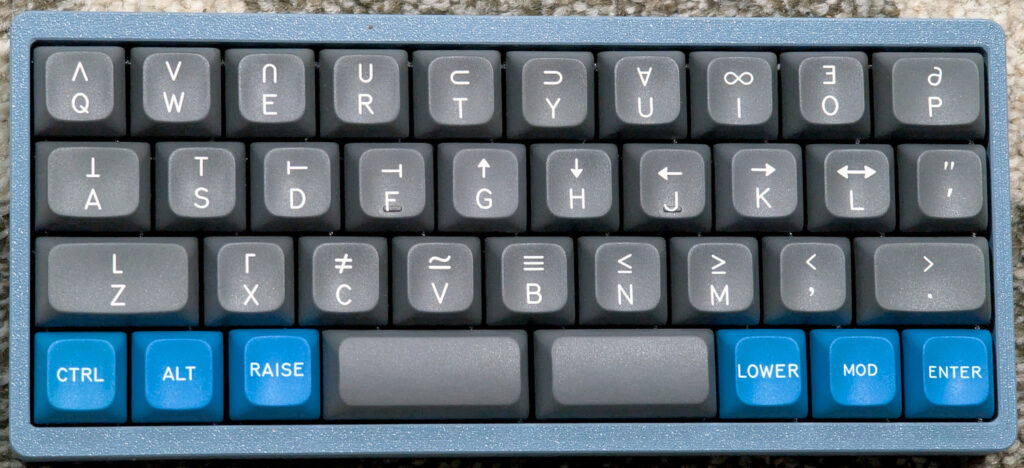
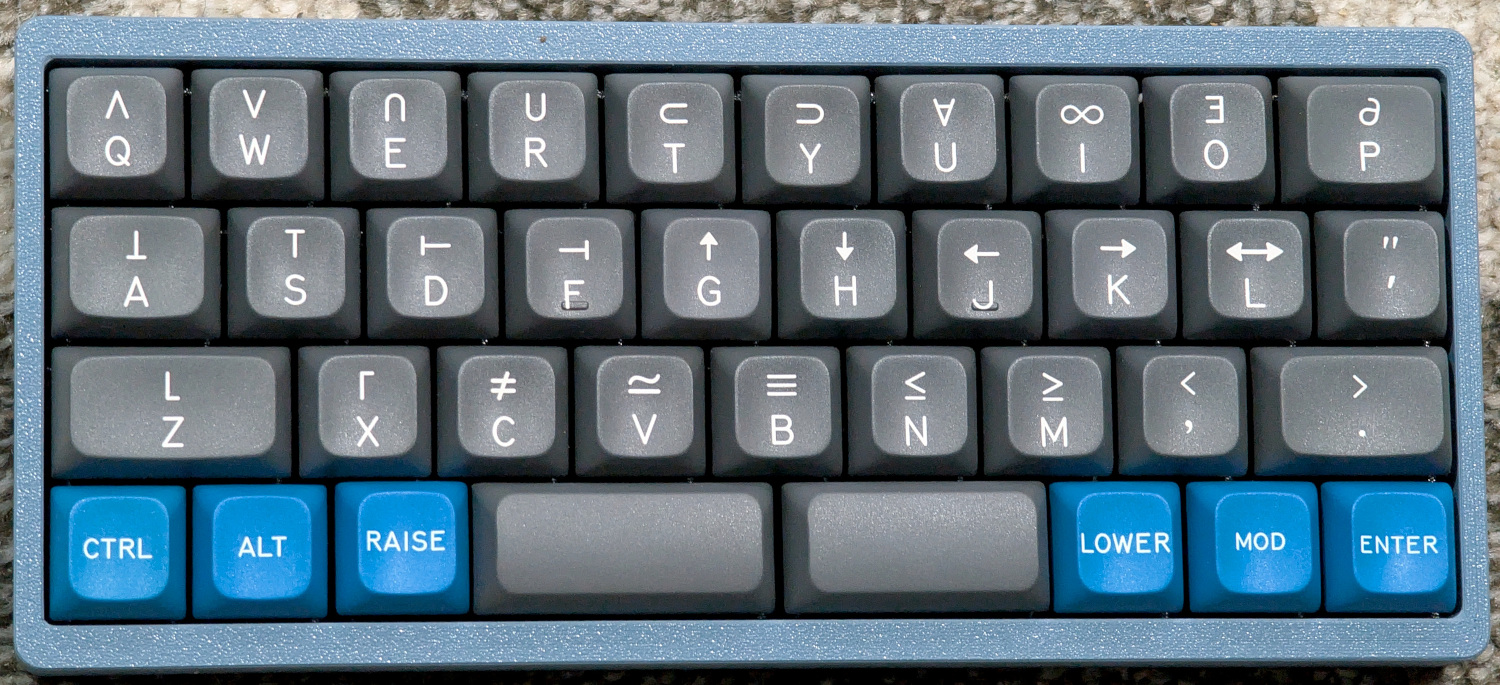
At the end, custom keycaps aren’t as cheap as generic sets, but they are comparable with more boutique sets. I opted for the below custom set, which is based on the popular Space Cadet design. Space Cadet was a keyboard designed in 1978 and used on LISP machines at MIT. I made some mistakes on my first foray into this, but Yuzu created a professional grade set of keycaps for me at a price that is comparable to a high quality set.


A QAZ style keyboard with custom PBS keycaps based on the popular Space Cadet design


Published on April 23, 2026
Full Post
0 Responses

IPv6 Explained: Why Adoption Is Still Slow Decades Later

Most of us don’t just use the internet once a day — we’re constantly surrounded by connected devices. Phones, laptops, TVs, cameras, even appliances. And that number keeps growing.

At the center of all of it is the basic Internet Protocol (IP), which is what allows devices to talk to each other.

The current version most of the internet still relies on is IPv4. The problem is that IPv4 only supports about

Most of us don’t just use the internet once a day — we’re constantly surrounded by connected devices. Phones, laptops, TVs, cameras, even appliances. And that number keeps growing.

At the center of all of it is the basic Internet Protocol (IP), which is what allows devices to talk to each other.

The current version most of the internet still relies on is IPv4. The problem is that IPv4 only supports about 4,294,967,296 billion unique addresses — and in practice, even fewer than that.

  • Large blocks are reserved for special purposes
  • Early allocations gave organizations far more addresses than they needed
  • Devices are now always connected instead of sharing connections
  • Broadband adoption continues to expand globally

IPv6 has been around since the late 1990s and became a formal internet standard long before most people ever heard of it.  Despite this, adoption has not moved forward very quickly. This expands addressing to 340 undecillion total addresses. What’s an undecillion? 10 to the 36th power- a trillion trillion trillion.

IPV6 and IPV4 can coexist, but one is not backward compatible to the other. You can run a ‘dual stack’ connection, that connects over both versions. Usually this will be IPV6 with an IPV4 fallback.  A protocol called ‘Happy Eyeballs’ is used to pick the best option of the two.

Why Has IPv6 Adoption Been So Slow?

IPv6 was introduced in the late 1990s. We are now decades into its existence, and yet most home networks — and a surprising number of enterprise ones — still lean heavily on IPv4.

Yes, we “ran out” of IPv4 addresses on paper. But instead of forcing a painful transition, the industry engineered its way around the problem. Most users wouldn’t be able to tell the difference between using IPV4 or IPV6.

Network Address Translation

Network Address Translation (NAT) became the default. Instead of every device needing a public IP address, entire homes — and even large networks — now sit behind a single one. Your router quietly handles the translation, and for most users, it just works. It is only users who want to host their own services who care as much about having publicly routable IP addresses.

That one workaround removed the urgency that IPv6 depended on. If nothing is visibly broken, nobody is motivated to replace it. Businesses had little motivation to do so, leaving it as important to a much smaller group of people.

Internet Service Providers

Most Internet Service Providers support IPV6, but good luck getting support. Performance is inconsistent. So, your mileage as a customer may vary. Over the last few years, I have turned on and turned off IPV6 at various times, due to reliability issues, but despite limited adoption, it continues to get more reliable and hopefully will continue to do so in the future.

The one exception here is mobile. Mobile providers, especially in Asia, are going native IPV6 mostly due to the need for increasing address space. This is slowly making its way to carriers in the rest of the world. So, considering that, it may be what has caused home ISPs to improve, and may drive additional business adoption as well.

Major platforms like Google and Facebook already see a significant percentage of traffic over IPv6.

Advantages

IPv6 is objectively better in a lot of ways:

  • Vast address space
  • End-to-end connectivity
  • Simpler routing (in theory)

But here’s the problem: there’s no killer feature that users notice.

Switching to IPv6 doesn’t:

  • make your internet faster
  • improve your Wi-Fi
  • unlock some must-have app or other features

IPV6 can be faster than IPV4, but that isn’t strictly because of the protocol. It depends. You may find that one protocol or the other is faster depending on the route your traffic takes.

Should You Enable IPv6?

By default, whether you have a commercial router or a homebuilt one like I do, it is usually very easy to turn on IPV6. If it doesn’t immediately work, you may have to google and adjust a few settings for your ISP. At this point, you can judge for yourself whether or not it is beneficial. Keep it on unless you have issues and see what happens.

If you want a full experiment, turn off IPV4 just to see what happens. You may, like on mobile, not even notice.

Why has IPv6 adoption been so slow?
IPv6 adoption has been slow because IPv4 never actually stopped working. Technologies like NAT allowed networks to stretch limited IPv4 addresses, removing urgency. Since IPv6 offers few noticeable benefits to everyday users, most networks continue to run both protocols without fully transitioning.

Published on April 20, 2026
Full Post
0 Responses

Can’t Buy a New Router But You Can Build One

Recently, the FCC in the United States banned foreign made routers made by some of the most popular manufacturers…which means…well, pretty much all not already approved from popular brands. It means you can continue to buy current routers, but any new technology…not so much. The ruling is something of a joke. For one, manufacturers can just continue to sell old models of routers without new innovation.

The argument is that foreign entities can compromise these devices, however, they could compromise the existing ones, and even the new ones…they could deploy updates at any time and open a hole that wasn’t there previously. So, what is the solution? For me, that was build my own. I had gone back and forth on this over the years.

For one, if you wanted to stay with the most common routers, there exist many third party firmwares for consumer routers. These are open source options that give you more control, like dd-wrt, and openwrt. Routers are effectively little computers, and very limited ones at that. These routers have:

  • low power and relatively slow CPUs
  • extremely limited RAM
  • limited space to store additional programs

There is a lot of room therefore to move up. Instead of using a purpose-built router appliance, you can simply replace it with a low-power PC running router software Modern low power CPUs like the N100/N150 series are perfect for this function. You can use a mini PC, or there are manufacturers offering ones with specifications specifically in mind to act as firewall and router appliances. A more powerful processor gives your new router plenty of room for advanced networking functions.

To run my router, I chose Opnsense. Opnsense is an open source firewall and router, with a load of features and installable extensions.

  •  Enterprise-grade firewall controls
  • VPN support
  • traffic shaping
  • DNS filtering
  • detailed monitoring and logging

The default gives you a robust and secure router, and beyond that, any enhancement you can imagine can be added. And because it is modular, you can install additional functionality through plugins. This makes it far more flexible than most commercial routers.

What could be considered an advantage of building your own router is separating routing from Wi-Fi. It means you can upgrade and maintain these systems separately. These systems don’t actually have to live together. By addressing each piece individually, you can have better quality equipment, more reliability, and easier upgrades. If Wi-Fi standards change (and they always do), I can simply replace the access point without touching the router.

My Opnsense instance handles a lot more than a simple embedded appliance can. It:

  • Secure Site to Site VPN to multiple locations
  • Private VPN for my laptop and phone when on the go
  • Encryption for self-hosted services
  • Advanced firewall rules
  • DNS Management
  • Network isolation for IoT devices

For technically inclined users, it is relatively easy to get started and expand and learn over time. I cannot say how many times I have dug deep into the options when I added those VPNs, when I moved securing LetEncrypt certifications for my homelab onto the router, and more.

It isn’t just a long term solution, it is an adventure.


Published on April 6, 2026
Full Post
0 Responses

How to Choose a UPS with the Right Features in 2026

Choosing a UPS (Uninterruptible Power Supply) sounds simple. After all, people buying power strips don’t think that much about them. But not only are UPSes designed to protect your devices, they are designed to keep them running during a power outage. How do you pick the right combination of features and price? In a previous post, I talked about how a problem with my UPS could have caused disaster.

APC vs Cyberpower

The two most popular consumer UPS companies are probably APC and Cyberpower. While I have used both, the last few years, I have mostly purchased Cyberpower. Neither brand is perfect, however.

For most individuals, any of these options is an improvement over no protection.

Reliability Improvements

In order to improve the reliability of power delivered to our devices, you want these features to provide cleaner power to your devices.

  • AVR(Automatic Voltage Regulation) –  which ensures the delivery of power free from voltage fluctuations
  • PFC(Power Factor Correction) – This reduces current draw, making it more efficient, though you need to check on the power supplies of computers connected to it for compatibility.

Recommendations

For a full featured CyberPower, you might want to try the CP1000PFCLED. There are variants of this model with different power ratings. It has:

  • Automatic Voltage Regulation
  • Power Factor Correction
  • Swappable Battery
  • Data Port
  • LCD Screen for basic stats

Going down a level, you have the EC650LCD. It has:

  • The LCD Screen
  • The Swappable Battery
  • The Data Port

I use the less expensive model for some of my networking equipment and the one with extra features for my homelab server.

Absolute Requirements

  • Swappable Battery – You also want a UPS with a swappable battery, because without it, the day the battery fails, you have to buy a new unit.
  • Data Port – You also want a USB connection to hook into a system and neatly shut down, which both of the recommendations have.

In the end, a UPS is a valuable tool for protection, but you need to know what you are getting into.

Published on March 19, 2026
Full Post
cutting the cord ditching cable for youtube tv
1 Response

YouTube TV Review: Cutting the Cord After Years of Cable

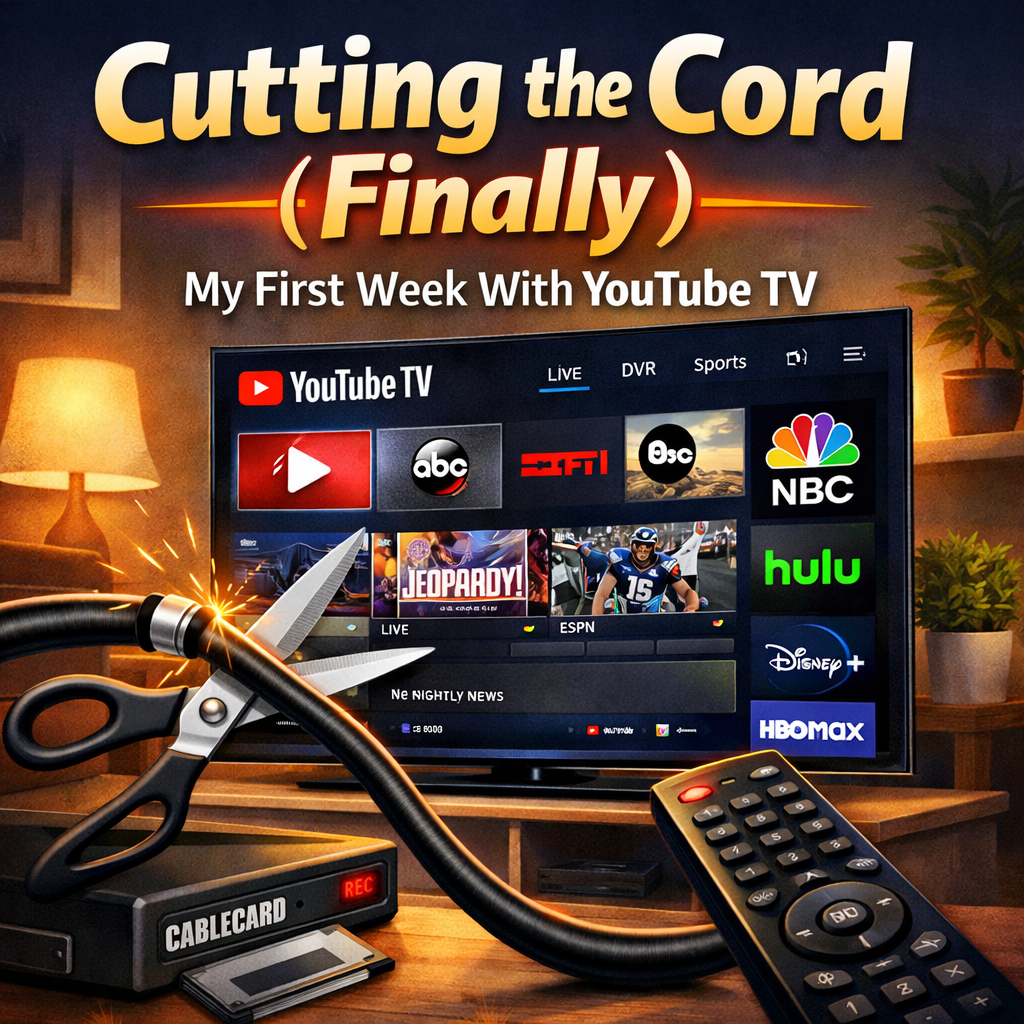
The day has finally come. After years of saying I would relinquish my cable card and my homemade DVR only when forced, my provider has made that decision for me. I still have broadcast, such as it is, but this seemed like a good time, when my provider has said that it will cease to work in the not too distant future, to try something new.

There are two types of cord cutting:

  • Subscriptions to Individual Streaming Services
  • Live TV Subscriptions

Live TV being a replacement for cable TV in functionality. I have traditional family members who are only slowly learning they don’t need appointment TV all the time. But they still want it. So, how do we solve this problem?

I decided to try a trial period of YouTube TV. Most people seem to consider it the gold standard for internet based Live TV. Some of the other providers are less expensive and may better suit you, but even the most expensive YouTube TV plan may be less than you are paying your cable provider noawadays.

Make a List of What Content You Want

What actually is important to you? What channels do you want? Do you watch sports? News? Etc. For exclusive streamers, which ones have the content you want? Is there anything you want to watch live? Or is live just about serendipity…as it helps you choose random things to watch?

YouTube TV: The Features

  • Six individual family accounts
  • Unlimited DVR Space, shows expire in a few months.
  • Three simultaneous things can be watched at once
  • Their 4K Plus add on adds unlimited streams, offline downloads, and some 4K content. 4K content is only available for playback on some devices.
  • Add Ons of various streaming services

YouTube TV: A Simple Review

I wasn’t sure what to expect.

  • Faster Release – The first advantage of having a DVR is that the program is available live, and immediately thereafter. No waiting till the next day after airing to watch it. If earlier is something you want.
  • Live TV Anywhere – You can watch this on the go, or on vacation.
  • Customization – There are no channel numbers, so you can rearrange the guide and hide the channels you don’t want. You can avoid the guide entirely and approach it from a show or movie point of view.
  • Intuitive Interface – The interface is familiar to anyone who has used YouTube or similar services. Even my technologically challenged relatives can handle it.

What YouTube TV Replaces From a Traditional DVR

  • Cable DVR hardware

  • CableCARD setup

  • Recording limits

  • Watching TV outside the house

Is YouTube TV Worth It?

If you are looking for a cable replacement with DVR functionality, YouTube TV is one of the best options currently available.

What YouTube TV does particularly well:

• Unlimited DVR storage
• Multiple family accounts
• Live TV anywhere
• Easy interface even for non-technical users

The biggest drawback is price. At $82.99 per month, YouTube TV is no longer dramatically cheaper than cable for some households.

However, if your current cable package includes:

  • equipment rental fees

  • DVR fees

  • regional sports fees

  • broadcast surcharges

YouTube TV may still end up being less expensive overall.

For many households, the real benefit is simplicity — no hardware, no installations, and access to your recordings from anywhere.

YouTube TV vs Cable TV

For many households the real comparison is not between streaming services, but between YouTube TV and traditional cable TV.

Feature YouTube TV Traditional Cable
DVR Unlimited cloud DVR Limited storage DVR, often at additional service cost
Equipment No dedicated hardware required Cable box + DVR rental
Watching Away From Home Works anywhere with internet Usually limited to home network, some limited mobile options
Setup Sign up online Technician or equipment installation
Price ~$82.99/month Often $90–$150 with fees

The biggest difference is flexibility.

With cable, recordings are tied to your DVR hardware. With YouTube TV, recordings are stored in the cloud and accessible from any device.

For households that travel frequently or want to watch on phones, tablets, and laptops, this can be a major advantage.

Conclusion: YouTube TV Is Compelling, Even with Budget Alternatives

The one possible stumbling block with YouTube TV is the base price of $82.99. It is at the higher end of the cable replacement services, but that is still again, less than many cable plans. But YouTube TV in February announced that they would introduce new less expensive plans that focus on different preferences, should you need fewer channels. After my promotional discount is over, I may look to pare down the selection. But for now, it may be time to call my cable provider and see how much cancelling TV through them will save me.

Because while bundle discounts may mean my internet through them will go up, it should hopefully be a net win.

Published on March 15, 2026
Full Post
UPS batteries fail silently
0 Responses

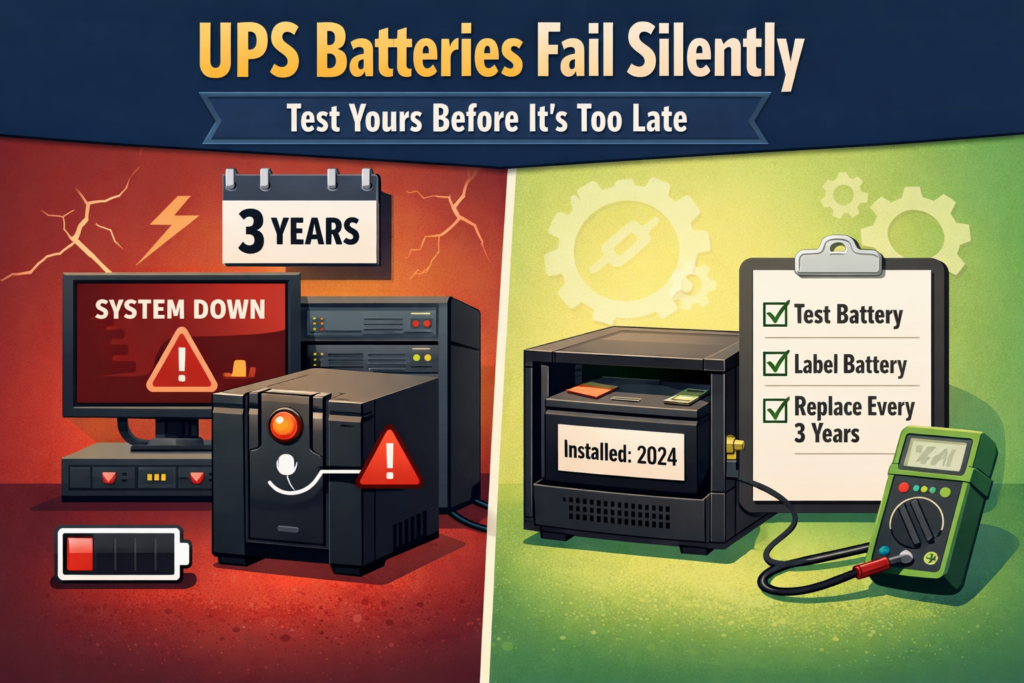
UPS Batteries May Only Last 2–3 Years (And They Usually Fail Without Warning)

Last week I walked into my office and discovered that several of my computer systems were down.

Everything about it looked like a power outage.

Except there hadn’t been one.

All of the equipment was connected to a UPS (Uninterruptible Power Supply) — essentially a battery backup power strip designed to keep systems running during outages.

But despite the name uninterruptible, everything had shut off.

UPS Batteries Don’t Last Forever

Most consumer UPS units use sealed lead-acid batteries. The typical lifespan is:

  • 2–3 years in normal conditions
  • shorter in warm environments
  • shorter if the UPS frequently switches to battery

Once the battery degrades enough, the UPS can no longer provide power and the unit may simply shut down when power fluctuates.

Many consumer UPS devices, such as mine,  provide little or no reliable warning before this happens. Silent failures defeat the purpose of a protective device.

My New Maintenance Plan

After this latest failure, I needed to adopt a much more systematic approach.

  1. Only buy UPSes with swappable batteries – the budget models often lack
  2. Label Every Battery – The date of installation of each battery will be labeled on the unit and on the battery.
  3. Perform Regular Hard Tests

At regular intervals:

    • Power down connected equipment
    • Unplug the UPS from the wall
    • Confirm that the battery engages.
    • Optionally plug in a small device to verify the UPS actually provides power under load.


A UPS is not a “set it and forget it” device. If you rely on one to protect important systems — servers, networking gear, or workstations — you need to treat the battery as consumable component. Plan to replace it every few years and test it occasionally. Most UPS manufacturers recommend replacing sealed lead-acid batteries every 3 years, even if the device still appears to function normally.

Otherwise, the day you actually need the UPS may be the day you discover it stopped working long ago.

Published on March 12, 2026
Full Post
0 Responses

Typing On The Go: Best Travel Keyboards in 2026

updated April 29, 2026

The best travel keyboard in 2026 depends on whether you need something foldable, mechanical, ultra-light, or wireless. Here are the best portable keyboards for working on the go.

There are a few approaches to travel keyboards. In previous years, we discussed folding keyboards as a possible solution. But a lot of those do not have the typing experience of a mechanical keyboard. So how can you get the customizable typing experience you want while on the go? All of my thoughts below use open source firmware for maximum customizability, and hotswap switch options where offered. In making

If you are looking for something other than a mechanical keyboard, you can consider something like the Keychron B series. These are scissor switch keyboards, a popular choice on laptops, but they offer full customizability with ZMK open source firmware. The smallest is the Keychron B1 Pro, at $33.99 but if your travel needs allow, you can get larger ones.

The next option would be a low profile mechanical keyboard. There are a lot of good options there.  Keychron, which makes a variety of mid-market keyboards, offers Ultra-Slim QMK open source KS-33 low profile mechanical switch keyboards. They offer a 75% at the lowest rate, the K3 QMK at $74.99 at the time this was published. They make a smaller 65% version as well.

If you want to bump up a level, you can go for a Nuphy low profile. Nuphy offers their Air series. The v2 series uses QMK open source firmware, and the newer v3 has reverted back to proprietary software, so for now would recommend the v2. I bought a used original version of this keyboard, acquiring used versions of both the 60 and the 75, both of which suffered from battery swelling, which is apparently not uncommon, but the ones I got used work perfectly well wired without a battery. Nuphy does not sell replacement batteries and tried to talk me into buying a new one. The Air60v2 is currently $109.95 and the Air75v2 is at $101.95.

The next option for portability is something that isn’t usually used for portability at all. Split keyboards. Split keyboards are usually a preference of individuals for ergonomic reasons. But a split also means your keyboard divides into two pieces. While there are a lot of unique layouts for these, you can get traditional layouts, just in two pieces. There is the Epomaker Split65. Epomaker does suffer from reports of inconsistent quality, but they are a popular budget brand. If you are willing to build, you can go over to companies like Keebio. They offer a kit and an assembled set of split keyboards, like the 65% Quefrency. They also offer the 60% FoldKB.

At the moment, my preference is for a 40% keyboard. These are keyboards that have less than 50 keys. There are a variety of layouts for these. While there are 40% made by bigger companies like Keychron, such as their Q9, you have to go a bit off the open path to find a bit more variety. I have my other site, selling supplies for these tiny keyboards, called Mechdreams, where you can see some of these. These small keyboards are great for small spaces, and you can fit one in your pocket, or even on your belt, and they are fully functional keyboards, although there is a learning curve.

So, what does this tell us? The best travel keyboard is the smallest or thinnest you can fit in your bag and still enjoy using.


Published on February 20, 2026
Full Post
0 Responses

How to Supercharge Your Alerts with Ntfy: Priorities, Actions, and Smart Integrations

Previously, I wrote about using Ntfy as a notification system for Uptime Kuma. But the system has a lot of other advantages, so I wanted to go into a bit more detail on how it can be used.

Ntfy works on channels. Channels manifest as paths under the server URL. For example, ntfy.sh/gadgetwisdom would be a gadgetwisdom channel. By default, the ones on the public server are all public, meaning that you can only hide or restrict them by having a hard to guess channel name, if you host the server, you can add access control globally, or on a per channel basis to require authentication for subscribing, publishing, or both.

  • Priorities – Ntfy supports custom priorities from 1 to 5, with 3 being the default.
  • Templates – If a service sends data in JSON format, you can write a template for Ntfy to interpret it, rather than having to set up something in between to do that.
  • Action Buttons –  You can add buttons to view a webpage, send a http request to a URL, or on Android only, trigger an Android intent.
  • Attachments – You can send attachments using a file or URL link in a message. Files expire in a few hours, but linked files would be available longer.
  • Icons – To help identify different messages, notifications can have an icon.
  • Phone Calls – Ntfy supports via a Twilio account notifying people via phone using text to speech.

This leaves a lot of creative opportunities for integrations.

  • Maybe I want to have urgent messages phoned to certain people. Setting priority levels and noises can also help with this.
  • Action buttons could allow me to instantly react to alerts with simple actions.
  • Attachments already let me view snapshots from my Frigate feed, but what else could I send.

As I look to better integrate this, this service reveals a lot of simple options I can leverage.

Published on December 1, 2025
Full Post

Get New Posts By Email