Gadget Wisdom

Author: David Shanske

Registration time

2011-09-25 06:23:49

Website

https://david.shanske.com/

Email

david@shanske.com

All posts by David Shanske

0 Responses

MythTV .24 Release Candidate 1 Available

Myth tv logo
Image via Wikipedia

The MythTV Development team has announced that the first release candidate for MythTV version .24 is now available for download. This means that the full version is not far behind. The Dev team has adopted a much more aggressive development cycle of late, possibly due to the long period between .21 and .22. New features of note(at least to us) include:

  • A new themeable on screen display
  • Audio – Support for 24 bit audio and HD audio formats, output up to 7.1, autopopulation of soundcard devices in settings
  • Beginnings of Blu-Ray support
  • Experimental support for CrystalHD hardware accelerated video decoding
  • Rework and Stabilization of DVD Playback
  • Support for ISOs over storage groups, which was missing from 0.23
  • Add a custom rule example for re-recording SD shows when/if it re-airs in HD
  • Enabling backend as a source of internet content sources, scripts, and grabber search requests
  • Allow the scheduler to attempt to rerecord a failed recording
  • MythNetvision now has grabbers for BBC iPlayer, Hulu, Revision3, The WB, PBS, Comedy Central, TedTalks, etc.
  • MythWeather now supports wunderground as a source
Published on October 19, 2010
Full Post
0 Responses

Fedora Docs Directly in your Electronic Reader

Publican, which is the software that generates Fedora Documentation, now supports OPDS, the Open Publication Distribution System. OPDS is a syndication format for electronic publications. Thus, Electronic Reader programs or devices can be given a URL for the Fedora Docs catalog, and can browse through it, and download publications for reading.

If you have a program that supports OPDS, add in the URL http://docs.fedoraproject.org/opds.xml, or if you want our preference…US-English, try http://docs.fedoraproject.org/en-US/opds.xml.

We use Aldiko,  an ebook book reader for the Android mobile OS. But there are several more. For a list of some complaint readers, click here.

Published on October 5, 2010
Full Post
0 Responses

Xmarks to Shut Down

Image representing Xmarks as depicted in Crunc...
Image via CrunchBase

XMarks is a service that offers cross-platform and cross-browser bookmark, password, and tab syncing. We’ve been using this service since it was Foxmarks, many moons ago. However, now, after four years, they have announced the discontinuing of service in January of 2010.

We’re not sure what we’ll do, as we tend to switch between Chromium and Firefox, using Xmarks to keep the two in sync. At this point, we suppose we’ll have to abandon one or the other. Firefox offers Firefox Sync. Chrome/Chromium offers sync to your Google account built in. Tough decision. As tough as choosing a browser.

Todd Agulnick, Co-Founder and CEO in a farewell blog post, thanked users, investors, and colleagues for their loyalty and signed off in true geek fashion, quoting Douglas Adams, “So Long and Thanks for all the Fish.”

Published on September 27, 2010
Full Post
0 Responses

Why You Might Finally Give in and Buy a Kindle

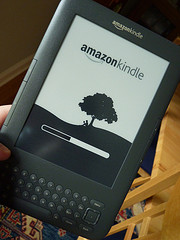
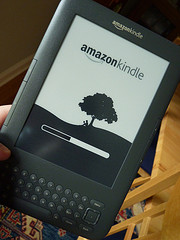
booting up the Kindle 3
Image by The Shifted Librarian via Flickr

It is time to revisit the pros and cons of the Kindle, which has finally plummeted into the land of reasonable pricing. Let’s go back to some of the reasons we quoted for buying and not buying a Kindle last year, and update it a bit.

Reasons to Buy a Kindle

  • It’s Great For Travel
  • You can email files to your Kindle address. With the new Wi-Fi option, you can do so for free. Over 3G it costs a few cents. But you can set a threshold to avoid overcharging
  • It looks great. Especially in graphite. The screen is much more conducive to long periods of reading than a conventional LCD screen. They’ve really improved the contrast. It is still in greyscale, but this is for reading. You want color, go to your computer.
  • Almost any book is available. And publishers and content owners can pull out old and out of print books and sell them on the Kindle as there is only a small cost to start out. Crunchgear reports the U.S. Kindle store has over 700,000 books. Barnes and Noble claims more, but includes public domain books in its tally, something Amazon apparently does not.
  • It is the future. Paper books won’t die, we don’t want them to.
  • You can switch seamlessly between your Kindle and reading the book on your computer, smartphone, etc. as Amazon has released Kindle apps for most major platforms.
  • Amazon is a large, stable company and the likelihood of them discontinuing the Kindle and taking your e-books with them is probably slim.

Reasons Not to Buy a Kindle

  • Books…old ones at least, can be cheaper.
  • There is still a value to the printed book
  • No expansion slot, but the new one has 4GB of memory, which is an estimated 3,500 books.
  • It must be charged. Your paper book never needs any batteries. Admittedly, advertised battery life is measured in weeks, not hours like most devices.
  • You are locked into the Kindle format. Your property is licensed, not owned, and you cannot move it to other platforms.
  • It doesn’t support EPUB format, which means you’d have to convert any book delivered in that format.
  • It doesn’t support lending, which the Nook limitedly does.
  • You can read periodicals for free online, why do they make you pay to subscribe to a blog?

Just remember, when we started advising against the cost of an e-book reader, it cost about four hundred dollars. For that price you could buy a computer. Now, at $139 for the wi-fi only version that we bought, or $50 more for adding 3G, it is at a price point that makes it more realistic. We’d like to see sub-$100 pricing soon, at least on the wi-fi version. The Kindle has estimated sales of about 5 million since it launched in 2007. The latest one is so popular it keeps getting sold out. The Nook, by comparison, has sold 1 million since it launched last year.

Books are are an over twenty billion a year business. About eight percent of U.S. readers use an e-book reader and in a recent poll, twelve percent of Americans said they are likely to get one within the next six months. Of course, the same poll indicated that e-reader purchasers were more likely to read(not a big surprise) and that the majority of them read more now than they did six months ago.

“”Customers tell us they love the freedom and flexibility of our Buy Once, Read Everywhere approach because they always have their full reading library at their fingertips and never lose their place in a book-whether they are reading on a Kindle or one of their other favorite devices,” said Dorothy Nicholls, Director, Amazon Kindle, in a recent press release announcing an update to Kindle for Android. The idea is this. If your platform is locked down, but you can get it on any device, is that not the type of DRM you can live with? The biggest complaint about DRM is the lack of portability. We’d like to see things more open, but given the choice between DRM content and no content at all…

In the music business, choosing between DRM-music and buying a CD kept us with CDs, which could be turned into DRM free music. We’ll see what happens. For the Kindle, the issue of library lending has to be handled. the revenue from selling licenses and services to libraries can be a wonderful one if they unveil a system to do so. Why should Overdrive Media Console and Adobe Digital Editions have this market?

To go back to the issue of EPUB and loading your own stuff onto it…you can load PDF files onto it. And if you don’t want to hook up via USB, you can email it to username@free.kindle.com to get it over Wireless. username@kindle.com to be charged for over 3G. And programs like Calibre, which we will get into in another post, can be set up to not only convert e-books from Google and Project Gutenberg, but support Kindle profiles and assemble news sources into an e-book format and autotransfer it to the Kindle every day, so you do not get charged(which you will if you subscribe to same through Amazon).

There is one final thing we have to get to. Many of us, including our editor, are Android phone users. Reading books on a 3-4 inch phone screen is doable, but it is small and can hurt one’s eyes. so, while it is doable for short periods, there is still a market for a device more conducive to reading.

And even with the larger LCD screen, the iPad hasn’t killed the Kindle yet, has it?

What do you think?

Published on September 26, 2010
Full Post
0 Responses

LED Bulbs Coming into their Own?

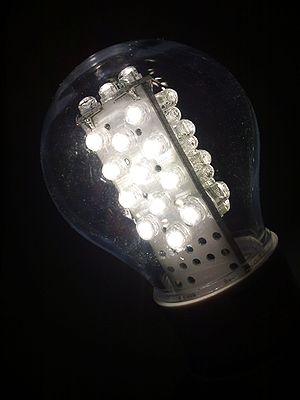
100-240V 2W (15W equivalent) E27 Osram LED Lig...
Image via Wikipedia

We bought our first LED light bulb a few months ago and put it into our desk lamp. The suspicious yet understandable issue with LED lightbulbs is lumens.

We aren’t used to lumens. We’re used to watts. Even though they aren’t accurate. CFL lightbulbs are labeled with lumens, which indicate light output, but they also note the equivalent in a traditional incandescent bulb because that is what we understand. Those notes are suspiciously missing from the LED packaging we see.

Even CNET’s Green Tech, and its editor, Martin LaMonica agrees with us.  But, he advises that is changing. He tried some samples from Lighting Science Group, which manufactures many of the LED bulbs for Home Depot‘s Ecosmart line. The bulbs are available on the Home Depot website, and should be in stores sometime this month.

But these bulbs which are getting brighter and more capable of what we demand of them are not cheap. Twenty to thirty-five dollars for a single light bulb is a bit much. The savings over time are a consideration, but the price will have to drop before it becomes a mainstream option.

The Department of Energy is set to unveil a program to help shoppers understand these new options. They will have a new label called Lighting Facts. It certainly will help if all bulbs use the same designations. We guess it is time to internalize the lumens system.

In the meantime, we have added some Sylvania ACCENT LED bulbs to a bathroom. Three produce enough to shine in this small room. But we knew that going in that they weren’t incredibly bright. We compared the lumens to the package of CFLs next to them at the store.

The concern is that the information isn’t getting to us. The New York Times reports that the Federal Trade Commission is suing Lights of America for misrepresenting the light output and life expectancy of their LED lightbulbs. For example, the company claimed one of its bulbs could replace a 40-watt incandescent, which typically puts out 400 lumens. They found the bulb in question only produced 74 lumens. In addition, they claimed another bulb would last 30,000 hours, but lost 80% of its light output after only 1,000 hours.

The company responded by stating that the bulbs that are the focus of the suit were introduced before formal standards were established for LED’s. Furthermore, they advise that they already responded by removing the equivalency claims from its packaging…which explains why the useful comparison of equivalency is omitted from LED packaging.

In the end, we’ll continue to experiment with these bulbs. Why? Because they last longer, use less electricity, and like the CFLs of a few years ago, will continue to improve. Why? Because the government and the public demands it.

Published on September 15, 2010
Full Post
0 Responses

Hauppauge and Silicondust Announce Alliance for HTPC CableCard Tuners

Silicondust USA Inc., maker of the popular HDHomerun networked digital TV tuner, and Hauppauge Computer Works, known for a variety of hardware tuners, have announced an alliance to introduce a USB-connected digital cablecard tuner.

Silicondust will concurrently be introducing its HDHomerun Prime, a cablecard version of their networked digital tuner. “Silicondust’s experience with digital cable access systems combined with Hauppauge’s strong computer TV tuner sales will produce a successful launch of this innovative product.” said Ken Plotkin, President and Chief Executive Officer of Hauppauge Computer Works.

The products should be available for sale by the end of the year. The competition, the PCI-Express based Ceton InfiniTV4 Cablecard Tuner, has suffered from parts shortages.

As previously mentioned, a recent change by Cable Labs has permitted these devices to be used in a limited fashion under Linux. As revealed by Jeremy Hammer, Vice President of Systems Integration for Ceton Corporation, during a recent podcast interview, developers are already working, with support from the hardware manufacturers, to integrate the necessary functionality into popular Linux DVR software MythTV. You can hear that interview on the HTPCentric Podcast, Episode 7(htpcentric.thedigitalmediazone.com).

The editor of this blog appeared in Episode 3 of the same podcast, discussing his MythTV setup. An update on that will be coming soon.

Published on September 12, 2010
Full Post
0 Responses

Diaspora Set to Reveal Open Source Project

Diaspora, billed as an open alternative to Facebook, has announced that it will be open-sourced on September 15th.

Diaspora was started as a project by four NYU students, proposing to build an open-source, distributed alternative to Facebook. Diaspora raised over $200,000 on Kickstarter, especially impressive considering they had only set a goal of $10,000.

On September 15th, they will put out a developer release, open their source code repository, publish a roadmap, and shift to a more community-oriented development style. Two of the members of the original team are taking a leave from their studies at NYU to run the project.

There are already some open social media projects out there, most notably, statusnet, a micro-blogging server that provides functionality similar to Twitter, on which the popular site, identi.ca is based. However, while identi.ca has been embraced by the tech community, it has not yet seen widespread adoption. Diaspora may face the same hurdles in stealing market share from Facebook, which has over 500 million active users.

Published on August 31, 2010
Full Post
0 Responses

Leo Laporte Learns the Value of Federation

Early this morning, famous podcasting personality Leo Laporte, Head TWIT over at the TWIT Network, posted on his Leoville blog a post titled Buzz Kill. Laporte had switched his microblogging over to the underappreciated Google Buzz, which he used to update Twitter. However, he discovered today, August 22nd, that none of his Buzz posts had been public since August 8th. As he puts it,

Maybe I did something wrong to my Google settings. Maybe I flipped some obscure switch. I am completely willing to take the blame here. But I am also taking away a hugely important lesson. No one noticed. Not even me. …But I feel like I’ve woken up to a bad social media dream in terms of the content I’ve put in others’ hands. It’s been lost, and apparently no one was even paying attention to it in the first place. I should have been posting it here all along. Had I been doing so I’d have something to show for it. A record of my life for the last few years at the very least. But I ignored my blog and ran off with the sexy, shiny microblogs.

You can read the full text at his blog here, but it does emphasize the thought processes we’ve been exploring as we learn about the federated social web. We have had some conversations with Evan Prodromou of Statusnet, among other people, as we try to understand this, and he was kind enough to send along some recommended reading since the last time we blogged about this.

We should own our own brand, and build its value at a site controlled by us. If you have an email address at a domain you control, you may have someone hosting it, but you can move it whenever you like. You have control. If you have your identity, and our email addresses and social media are part of the identity we build online, then the content is in your hands. Social media becomes a means of distribution, rather than a destination.

That is where the federated social web concept comes in. In a federated system, there are distinct entities that control parts of the system, but those parts are connected with agreed-upon rules to make a pleasing and usable whole. The World Wide Web is such a system. Email is such a system.

Statusnet instances aren’t for everyone, admittedly. Ours hasn’t attracted as many connections as Twitter, but gives us access to a different crowd. But what about blogging? Let’s take Gadget Wisdom.

  1. We write a blog entry.
  2. Our RSS feed updates. We use Feedburner to assist with that, but that isn’t required.
  3. We tweet the post to our Twitter account and dent it to our statusnet instance, so people know what we’re talking about. We still own the conversation.
  4. Our site draws in anyone talking about our tweet as comments on the post, thus bringing the discussion back to the blog.

Everything comes back to us. We are integrating social media into our site, not going out and relying on it exclusively. It is part of the reason that we don’t participate in Facebook but we do in Twitter. Twitter and similar microblogging paradigms works as a news delivery system, and can even be an alternative for RSS. Facebook has its status updates as well, but it is part of a bigger system that sees to tie everything together. We prefer to do that ourselves.

In case you didn’t get what we are saying…microblogging, social media, and sites such as Twitter, Jaiku, Friendfeed, Plurk, Pownce, Google Buzz, etc should be a content delivery and enrichment system, not a content creation system. Now, we disagree with Leo that they are “an immense waste of time.” We just believe that he should change his approach to social media. Let’s all bring our identities under our control.

Published on August 22, 2010
Full Post
0 Responses

SSD Prices Predicted to Drop below $1 per GB

Tested reports that, according to iSuppli Market Research, storage prices for Solid State Drives will fall below $1 per gigabyte by the end of this year. That would still be at least ten times the cost of a traditional hard disk drive. This might stimulate OEM sales, at least, and encourage manufacturers to start mainstreaming the technology.

The biggest advantage of a solid state drive, in our opinion, right now is as an operating system/program partition. We’ve added SSDs in most of our systems as OS drives, including our server. It allows us to spin down the traditional drives where we store our media. It, coupled with advances in boot technology on Linux, continues to speed up our boot experience.

Currently, a lot of our computers go down when not in use, and we’re trying to design more to do this. We’re down to only two systems running 24/7, and hoping to get that to one this year.

But, our own desires aside, if the price is competitive, we could see mainstream adoption of SSDs. They have no moving parts, are fast, which is a great advantage. They have longevity issues, but with some software wear-leveling techniques, and a three-year warranty(standard for HDDs as well), there shouldn’t be a barrier to using them. The technology continues to move forward and improve.

Published on August 22, 2010
Full Post

Get New Posts By Email