
Everything about it looked like a power outage.
Except there hadn’t been one.
All of the equipment was connected to a UPS (Uninterruptible Power Supply) — essentially a battery backup power strip designed to keep systems running during outages.
But despite the name uninterruptible, everything had shut off.
UPS Batteries Don’t Last Forever
Most consumer UPS units use sealed lead-acid batteries. The typical lifespan is:
- 2–3 years in normal conditions
- shorter in warm environments
- shorter if the UPS frequently switches to battery
Once the battery degrades enough, the UPS can no longer provide power and the unit may simply shut down when power fluctuates.
Many consumer UPS devices, such as mine, provide little or no reliable warning before this happens. Silent failures defeat the purpose of a protective device.
My New Maintenance Plan
After this latest failure, I needed to adopt a much more systematic approach.
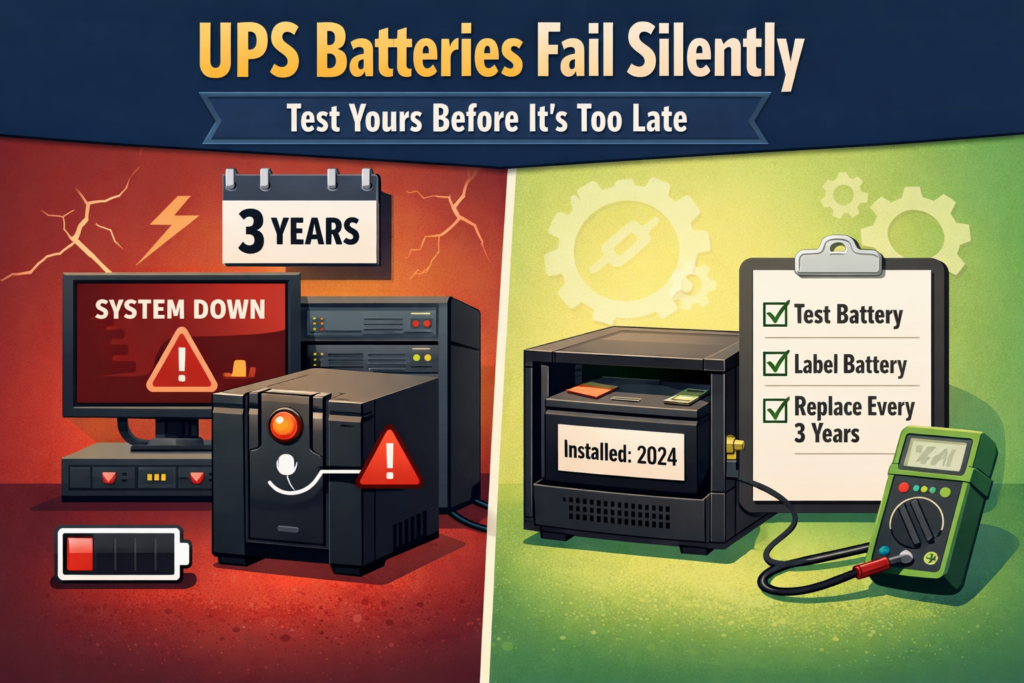
- Only buy UPSes with swappable batteries – the budget models often lack
- Label Every Battery – The date of installation of each battery will be labeled on the unit and on the battery.
- Perform Regular Hard Tests –
At regular intervals:
-
- Power down connected equipment
- Unplug the UPS from the wall
- Confirm that the battery engages.
- Optionally plug in a small device to verify the UPS actually provides power under load.
A UPS is not a “set it and forget it” device. If you rely on one to protect important systems — servers, networking gear, or workstations — you need to treat the battery as consumable component. Plan to replace it every few years and test it occasionally. Most UPS manufacturers recommend replacing sealed lead-acid batteries every 3 years, even if the device still appears to function normally.
Otherwise, the day you actually need the UPS may be the day you discover it stopped working long ago.
